

By: Kagiso Nkomo
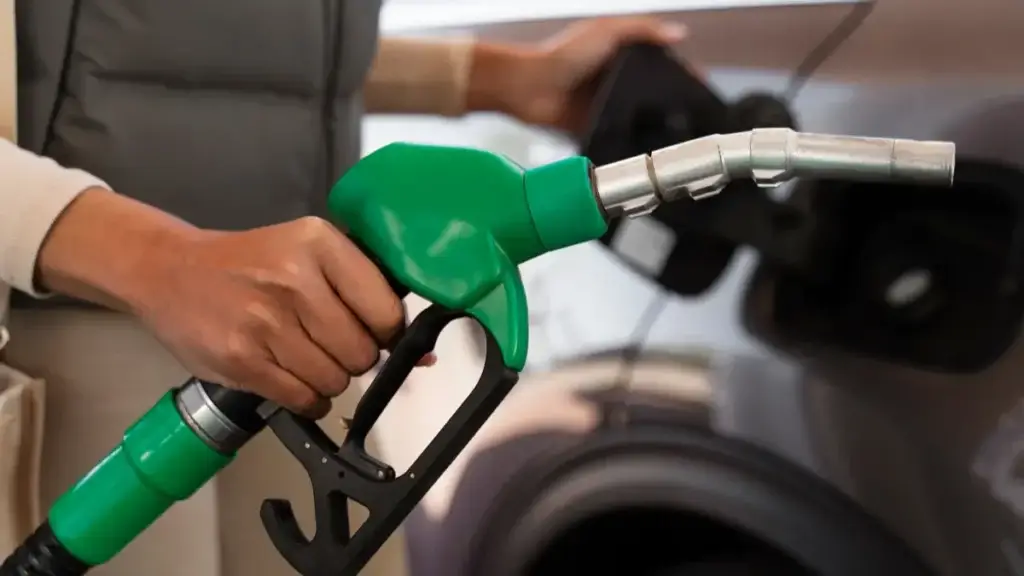
South Africa’s latest fuel price adjustment, announced today by government and effective this week, sets the tone for what is likely to be another difficult cycle for households, businesses and policymakers. Inland petrol prices are set to rise by approximately R1.80 to R1.90 per litre, taking the price of petrol from around R23 per litre to roughly R25 per litre. Diesel, which carries far greater weight in the productive economy, is increasing by as much as R4.00 to R4.50 per litre, pushing prices from the mid-R20 range to above R30 per litre. While temporary fuel levy relief remains in place, the adjustment still represents one of the sharpest cost shocks in recent months and provides immediate context for the pressures now unfolding across the economy.
This is not just another monthly price change. It is a systemic shock that begins at the forecourt and works its way through the entire economic structure, ending in slower growth, tighter household budgets and mounting pressure on both business and the state. In an economy as dependent on road transport as South Africa’s, fuel is not simply another expense. It is a foundational input, and when it rises sharply, everything else eventually follows.
The first impact is felt in transport. Logistics operators, freight companies, taxis and buses absorb the increase almost immediately, but only briefly. Diesel, which drives the movement of goods, has risen the most, and operators have limited room to adjust. Tariffs increase, and public transport fares follow. The cost of moving goods and people rises across the board. In a country where the overwhelming majority of goods are transported by road, this shift is structural rather than marginal.
From there, the pressure moves into supply chains. Every product on a shelf carries an embedded transport cost. As fuel prices rise, so does the cost of distribution, from farms to warehouses and from factories to retailers. This is where second-round effects begin to take hold. Businesses cannot absorb these increases indefinitely and begin passing them on. The result is cost-push inflation driven by rising input costs rather than demand.
Food prices are particularly sensitive. Agriculture depends heavily on diesel for machinery, irrigation and transportation. As costs increase at every stage of production, food inflation follows. Staples such as maize, bread, vegetables and dairy products begin to rise. For lower-income households, which already spend a large share of their income on food and transport, the impact is immediate and severe.
Businesses face growing pressure as higher logistics and input costs collide with weak consumer demand. Margins begin to shrink. Firms are forced into difficult choices: raise prices and risk losing customers, or absorb costs and erode profitability. Many attempt a balance by increasing prices gradually while cutting internal costs. The consequences are clear. Investment is delayed, hiring slows and, in some cases, jobs are lost.
Households feel the strain soon after. Higher fuel and transport costs translate directly into higher living expenses. Food becomes more expensive, commuting costs rise and disposable income declines. Spending shifts away from non-essential items towards basic needs. Retail, hospitality and small businesses begin to feel the impact as demand softens. The broader effect is a slowdown in consumption across the economy.
At a macroeconomic level, these pressures feed into inflation. Fuel increases directly affect the consumer price index, but more importantly, they push up transport, food and production costs. Inflation becomes more widespread and persistent. This complicates the outlook for the South African Reserve Bank. Interest rates are likely to remain elevated for longer as the Bank works to contain inflation. For consumers and businesses, this means continued high borrowing costs and tighter financial conditions.
Economic growth inevitably slows under these conditions. When households spend less and businesses invest less, overall economic momentum weakens. South Africa’s already modest growth outlook comes under further pressure. The risk is a prolonged period of low growth combined with high inflation, a situation that is difficult to reverse.
The fiscal implications add another layer of strain. Government’s extension of fuel levy relief has cushioned the immediate impact, but at the cost of reduced revenue. This places additional pressure on an already constrained fiscal position. The trade-off is clear. Providing relief to consumers today limits the state’s ability to fund future spending and stabilise public finances.
At the same time, social pressure builds. As the cost of living rises, so does public frustration. Wage demands increase, labour tensions intensify and pressure mounts on policymakers to intervene. These dynamics introduce further uncertainty into an already fragile environment.
The sequence is clear. Fuel prices rise, transport costs increase, supply chains adjust, prices climb, inflation accelerates, interest rates remain elevated, growth slows and social pressure intensifies. Each stage reinforces the next, creating a cycle that affects every part of the economy.
At a strategic and executive level, the response must be decisive. Pricing models need to adjust quickly to reflect rising costs, as delays lead directly to margin erosion. Supply chains should be reconfigured to reduce reliance on long-distance logistics, with greater emphasis on localisation and diversification of suppliers. Cash flow management becomes critical, with a focus on maintaining liquidity and preserving operational stability. Periods of disruption also create opportunity. Businesses that move early can capture market share, secure better supplier terms and position themselves ahead of slower competitors.
For SMEs, speed of response is equally important. Costs must be reflected in pricing without delay, even if adjustments are gradual. Logistics must be optimised through better planning and consolidation of deliveries. Strong working capital discipline is essential, with faster collection of receivables, tighter inventory management and careful control of expenses. In this environment, hesitation can quickly translate into financial strain.
For households, the approach is necessarily defensive. Spending needs to shift towards essential items, with careful management of transport and food costs. Where possible, fuel-intensive activities should be reduced. Taking on new debt should be approached cautiously given the likelihood of sustained high interest rates. The focus is on maintaining financial stability in a more expensive environment.
Fuel price increases do not dissipate quickly. They become embedded in the cost structure of the economy. South Africa’s reliance on road transport and imported fuel amplifies this vulnerability. Unless there is a significant easing in global oil prices or a strengthening of the rand, the pressure is likely to persist.
This is not a temporary disruption. It is a structural stress test for the economy. It will expose inefficiencies, reward disciplined decision-making and reshape competitive dynamics. Those who understand the full extent of the chain reaction and act with clarity and speed will be better positioned not only to withstand the impact, but to emerge stronger.
*Kagiso Nkomo is a South African entrepreneur and industrialist with experience in manufacturing, supply chains, and enterprise development, focused on inclusive industrial growth. He holds an MBA, a BBA (Hons), and a BCom in Supply Chain Management